




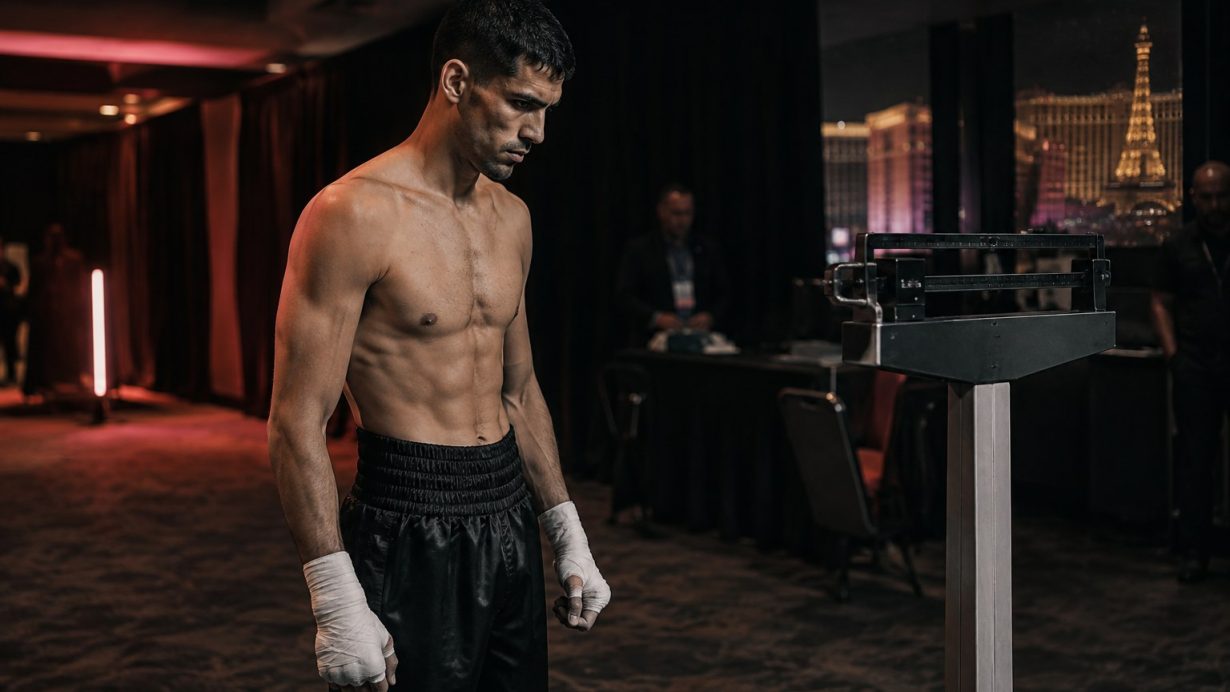
There are weigh-ins that exist mainly to produce photographs, and then there are weigh-ins that contain information.
Ryan Garcia versus Conor Benn belongs firmly in the second category.
For most major fights, the final weigh-in is a formality. Fighters arrive dehydrated, make the contracted limit, pose for cameras and immediately begin replacing the fluids and calories removed during the final stages of camp.
Friday in Las Vegas feels different because Conor Benn’s return to 147 pounds has become one of the central stories of the entire event.
The challenger has not tried to pretend otherwise. Benn has spoken openly about how punishing the process has been, describing an extended calorie deficit and acknowledging that getting back to welterweight after years at higher weights has tested him severely.
That honesty makes the scale worth watching.
Making Weight Is Only Half the Story
The first question is obvious: does Benn make 147?
But that is not the only question.
A fighter can technically make weight and still have handled the process badly. Conversely, a fighter can look drawn and uncomfortable on the scale, rehydrate intelligently and perform normally the following night.
That is why weigh-in analysis should avoid the lazy habit of diagnosing a boxer from a photograph.
What we know is that Benn has not competed at the welterweight limit since 2022 and says this will be his final fight there. We also know the WBC reported that both Benn and Garcia satisfied its staged weight-monitoring requirements leading toward the official weigh-in.
Those facts can coexist with the reality that Benn found the cut extremely difficult.
Why Benn Accepted the Cut
The answer is opportunity.
Benn has spent much of his career chasing the kind of night that can redefine how he is viewed internationally. A WBC title fight against Ryan Garcia in Las Vegas is exactly that opportunity.
Winning would give Benn a recognized world championship and one of the most commercially valuable victories available around his part of the weight spectrum.
It also explains why he was willing to return to a division he no longer considers his natural home.
Professional boxing careers are short. The perfect opportunity rarely arrives under perfect circumstances.
Benn has effectively decided that the reward justifies the discomfort.
Rehydration Becomes the Next Contest
The moment Benn leaves the scale, another process begins.
There is no reported rehydration clause preventing him from adding substantial weight before Saturday’s fight. Garcia has repeatedly highlighted that fact and suggested Benn could enter the ring considerably heavier than the champion.
That creates an interesting trade-off.
Benn has to sacrifice significantly to reach 147, but he may recover enough weight afterward to possess a meaningful physical advantage inside the ring.
Whether that advantage is useful depends on how effectively his body recovers.
Rehydration is not simply drinking as much water as possible. Elite teams manage fluids, electrolytes, carbohydrates and food carefully because restoring body mass too aggressively can create its own problems.
Saturday’s version of Benn therefore matters much more than Friday morning’s version.
Garcia’s Situation Is Different
Garcia appears considerably more comfortable operating around the welterweight limit.
That means his camp has not been defined by the same weight narrative, allowing more attention to remain on tactics.
His advantages are familiar: exceptional hand speed, sudden counterpunching and a left hook capable of changing a fight instantly.
Against a pressure fighter, those tools become particularly dangerous.
Benn has to cross open space to do his best work. Every time he enters, Garcia has an opportunity to intercept him.
The challenger therefore needs his legs, reactions and conditioning working properly. If a difficult cut reduces any of those qualities, the matchup becomes harder.
If Benn recovers well and carries his pressure for twelve rounds, the same weight story could work in the opposite direction. A physically strong Benn forcing Garcia backward could make the champion fight at a pace and range he would rather avoid.
Don’t Confuse Appearance With Evidence
Boxing social media has already filled with photographs of Benn accompanied by medical conclusions from people who have never examined him.
That is not useful analysis.
Weight cutting is a legitimate safety issue in combat sports, and severe dehydration can be dangerous. But determining whether a particular athlete is medically compromised requires more than comparing two photographs taken under different lighting.
The responsible position is simpler.
Benn says the cut has been extremely hard. His recent fighting weights support the idea that returning to 147 is a major physical undertaking. The WBC says he met its staged monitoring requirements. The official weigh-in will provide another data point.
Anything beyond that before the fight becomes speculation.
The Scale Can Change the Entire Conversation
If both men comfortably make 147, much of the anxiety surrounding the event will immediately decrease.
If Benn struggles, requires additional time or misses the championship limit, the entire story changes.
There is also the reported late discussion over glove size, with both camps said to have agreed to eight-ounce gloves even in a scenario where a fighter exceeds the usual threshold, pending regulatory approval.
That means Friday could determine more than who is eligible to win the WBC belt. It could influence the equipment used and the final expectations surrounding the fight.
Then the Real Analysis Begins
The temptation before a major event is to turn every development into a prediction.
We are not doing that here.
A dedicated Garcia-Benn predictions and betting-picks article belongs separately from straightforward fight coverage. The purpose of the weigh-in is to give us better information before making any serious assessment.
That distinction matters.
Boxing is uncertain enough without pretending guesses are facts.
Friday’s scale will not decide Ryan Garcia versus Conor Benn. But unlike most of the noise generated during fight week, it can materially change how we understand the matchup.
For once, the most interesting fight-week event might involve nobody throwing a punch.